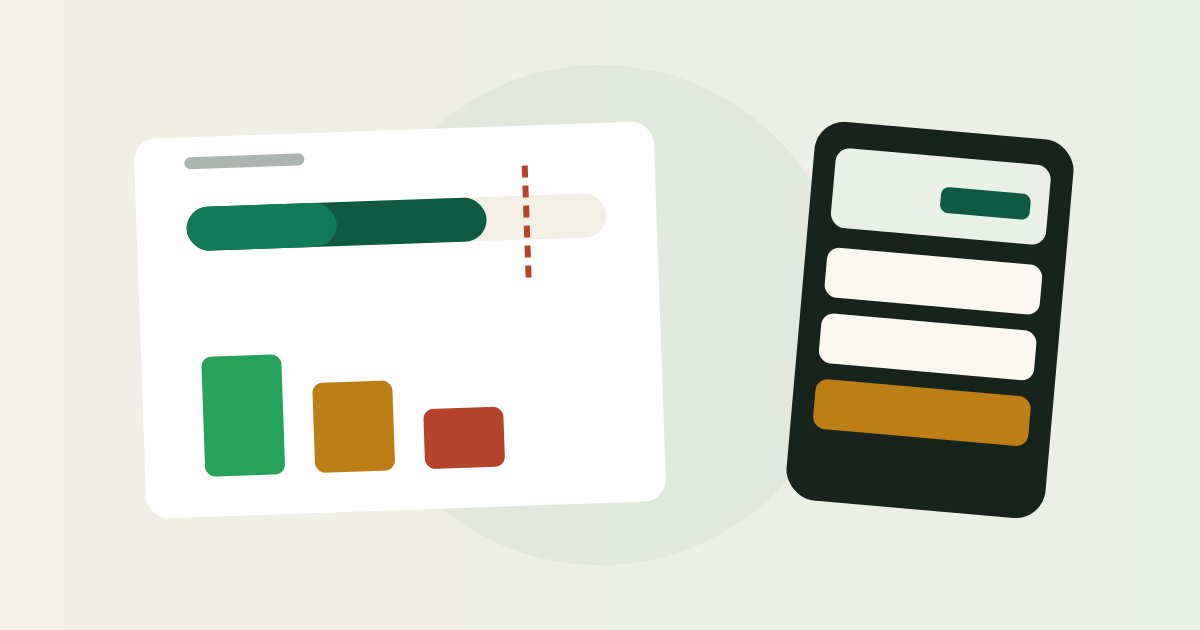
Books for importers and big wholesalers: few bills, big amounts, no room for mistakes
Twenty or thirty bills a day, each worth lakhs. Keeping LC margins, landed cost, cheques and party dues in one set of books, with a worked example.
3 min read
On this page
In short: an importer or big wholesaler writes few bills, but each one is large, so one mistake costs lakhs, not hundreds. Bisnesy keeps the LC margin and which bills fall under each LC, the real cost per carton after freight and C&F, where every cheque taken and given stands, and each party's own rate, credit limit and statement, all in one set of books.
Few bills, big risk
A retail shop writes 300 small bills a day; a mistake costs a few hundred taka. An importer or big wholesaler writes 20 or 30, each worth lakhs. The risk sits in four places:
- Wrong cost: price from the supplier's invoice and every sale looks more profitable than it is.
- Money tied up: LC margin at the bank, cheques waiting to clear, wholesalers' dues month after month.
- Limits crossed: a big party takes a new shipment before paying for the last one.
- Books in one head: only the owner knows which party gets which rate.
Landed cost, worked out
Take one shipment:
| Cost | Taka |
|---|---|
| Supplier's invoice (500 cartons) | 5,00,000 |
| Freight | 40,000 |
| Duty and C&F | 60,000 |
| Total | 6,00,000 |
By the invoice alone, a carton costs 5,00,000 ÷ 500 = ৳1,000. The real cost is 6,00,000 ÷ 500 = ৳1,200.
Sell at ৳1,300:
- By the invoice, the profit looks like 1,300 − 1,000 = ৳300 a carton.
- The real profit is 1,300 − 1,200 = ৳100, only 7.7% of the sale.
Over 500 cartons the gap is 500 × 200 = ৳1,00,000: a lakh of profit in the books that never existed.
In Bisnesy, freight, duty and C&F entered on the purchase are spread across its lines into each item's landed cost. Stock value and the profit on every sale start from that real cost.
LCs: where the margin is, which bills belong
Each LC from your bank is one row: the margin you paid, the supplier bills shipped under it (pick the LC when you enter the bill), and retire it when the bank pays the supplier. How much is held at the bank as margin is visible at a glance.
Cheques taken and given
Big deals run on cheques. Every cheque, taken or given, shows where it stands: waiting, cleared or bounced. A bounced cheque puts the party's due back, and the cheques due this week show on the dashboard.
Each party's own rate and limit
- Party-wise rates: the rate a wholesaler buys at fills in on their bill by itself.
- Credit limit: choose in Settings whether a sale over the limit asks first or stops. A bill that pays old dues down never trips it.
- Statements: pick the dates and send every bill and payment with the running balance as a PDF on WhatsApp.
Godowns, cartons and pieces
Stock is counted per godown, and transfers move goods between them. Buy by the carton and sell by the carton or the piece, two units of one product at two prices, with one stock count.
Why this kind of business needs software first
With few bills it feels like a notebook will do. But the cost of a mistake grows with the amount: in the example above one shipment carried a lakh of profit that was not there. Cutting that risk is the job here, not the number of bills.
Seven days free with every feature, no card. More: Bisnesy for importers and Bisnesy for wholesalers.
- আমদানিকারক
- পাইকারি ব্যবসা
- এলসি ম্যানেজমেন্ট
- LC management software
- ল্যান্ডেড কস্ট
- import costing
- আমদানির খরচ হিসাব
- চেক
- ক্রেডিট লিমিট
- importer software